

What are Design Controls
Design controls are systematic processes and procedures that ensure medical devices are designed to meet user needs and intended uses. They establish a framework for managing design and development activities from conception through production, ensuring safety, efficacy, and regulatory compliance. These controls provide documented evidence that design outputs meet design inputs, that risks are identified and mitigated, and that the final product performs as intended. They’re not just regulatory checkboxes. They’re essential quality management practices that prevent costly design flaws and ensure patient safety.Relevant Standards
- ISO 13485:2016, Clause 7.3 - Design and Development
- QMSR 21 CFR 820.30 (Incorporated by reference to ISO 13485 per 820.7)
Planning: Setting the Foundation
Effective design control begins with comprehensive planning. Organizations must establish and document critical planning elements before design activities commence. This upfront investment prevents costly rework and ensures regulatory compliance throughout the development lifecycle.01 Design and Development Stages
Define the distinct stages of the design and development process, including clear boundaries and transitions between each stage (e.g., concept, design input, design output, verification, validation, transfer).02 Review, Verification, and Validation Activities
Specify the appropriate review, verification, and validation activities for each design and development stage. This ensures that design outputs meet inputs and the final product meets user needs and intended use.03 Responsibilities and Authorities
Clearly assign responsibilities and authorities for each design and development activity. This includes defining who is accountable for decisions, documentation, approvals, and execution throughout the process.04 Resource Needs and Competence
Identify all necessary resources, including personnel, infrastructure, and work environment. Define the required competencies for personnel involved in design and development, and ensure adequate training is provided.05 Traceability Methods
Establish and document methods for ensuring traceability between design inputs, design outputs, verification activities, and validation activities. This helps manage design changes and provides documented evidence for compliance.These planning requirements aren’t optional—they’re mandatory documentation that auditors will review. Organizations that skip thorough planning often face delays, quality issues, and regulatory observations during inspections.
Applicable Regulatory Requirements
- ISO 13485:2016, Clause 7.3.2 (a-f) - Design and development planning
- 21 CFR 820.30(b) - Design and development planning
Design Inputs: The Requirements Foundation
Design inputs are the foundation upon which your entire device is built. These inputs must be complete, unambiguous, able to be verified or validated, and not in conflict with each other.Risk Management Integration
Design inputs must include applicable outputs from risk management activities. This ensures that identified hazards and associated risks are directly addressed in the device design from the earliest stages, not retrofitted later.Verification Readiness
Every requirement must be written in a manner that allows for objective verification or validation. Ask: “How will we prove this requirement has been met?” If you can’t answer that question, the requirement needs refinement.Completeness and Clarity
Requirements must be comprehensive enough to fully describe what the device must do, yet clear enough that there’s no ambiguity in interpretation. Conflicting requirements must be resolved before design activities proceed.Applicable Regulatory Requirements
- ISO 13485:2016, Clause 7.3.3 - Design and development inputs
- 21 CFR 820.30(c) - Design input
Design Inputs: Practical Examples
Avoid Subjective Requirements
Indicate a Possible Test
Indicate a possible test by adding a simple phrase to connect a specific criterion to the requirement.- Screen must be visible from a distance of 1m.
- Pump shall be able to deliver fluid continuously for 30 minutes at a rate of 2ml/min.
Avoid Making Multiple Requirements
Each requirement should address a single testable criterion. When you see “and” or “or” in a requirement, consider splitting it into separate, independently verifiable requirements.Design Inputs: Quality Characteristics
Good design inputs address functional requirements (what the device does), performance requirements (how well it does it), and constraint requirements (the boundaries within which it operates). Each category requires different verification approaches and acceptance criteria. A well written Requirements Specification will have the following attributes:Applicable Regulatory Requirements
- ISO 13485:2016, Clause 7.3.3 - Design and development inputs
- 21 CFR 820.30(c) - Design input
Design Outputs: Documented Evidence
Design outputs are the tangible results of your design and development process—the specifications, procedures, and documentation that define exactly what gets built and how.Applicable Regulatory Requirements
- ISO 13485:2016, Clause 4.2.3 - Medical Device File (MDF) requires organizations to establish and maintain a central repository of design output documentation for each device type or family.
- ISO 13485:2016, Clause 7.3.4 - Design and development outputs must be documented, meet the design and development input requirements, provide appropriate information for purchasing, production, and service provision, and include acceptance criteria.
- 21 CFR 820.30(d) - Design output procedures must ensure that design outputs are expressed in terms that allow for adequate evaluation against design input requirements, and are verified and validated.
01 Device Description & Labeling
General description, intended use/purpose, and all labeling including instructions for use02 Product Specifications
Complete technical specifications defining the device’s physical, functional, and performance characteristics03 Manufacturing/Production Procedures
Specifications and procedures for manufacturing, packaging, storage, handling, and distribution (software => production, distribution)04 Measurement & Monitoring
Procedures for measuring and monitoring device performance and quality throughout its lifecycle05 Installation Requirements
As appropriate, specific requirements and procedures for device installation06 Servicing Procedures
As appropriate, detailed procedures for maintenance, repair, and servicing activities PHASE [ALL/ANY]Design Review: Critical Evaluation
Design reviews are formal, documented, systematic examinations of design results to evaluate the design’s ability to meet requirements and identify problems. These reviews serve as critical checkpoints throughout the design lifecycle, bringing together multidisciplinary teams to assess progress, identify risks, and ensure design integrity.Applicable Regulatory Requirements
- ISO 13485:2016, Clause 7.3.5 - Design and development review
- 21 CFR 820.30(e) - Design review
Who Participates?
Include representatives from all functions concerned with the design stage being reviewed—engineering, quality, regulatory, clinical, manufacturing, and marketing. Independent reviewers provide objective assessment.When Do They Occur?
At appropriate phases such as feasibility completion, design input finalization, design output completion (“DESIGN FREEZE”), and before design transfer. The number and timing depend on device complexity and risk.What Gets Reviewed?
All design outputs relevant to the stage being reviewed, verification and validation results, risk analysis outputs, usability data, and any issues or concerns raised since the previous review.Documentation Requirements
Minutes must identify participants, design elements reviewed, issues identified, action items assigned, and evidence that design requirements have been met. PHASE 3Verification & Validation: Proving Design Success
Applicable Regulatory Requirements
- ISO 13485:2016, Clause 7.3.6, 21 CFR 820.30(f) - Design and development verification / design verification
- ISO 13485:2016, Clause 7.3.7, 21 CFR 820.30(g) - Design and development validation / design validation
Understanding V&V
Verification means confirmation by examination and provision of objective evidence that the design output meets the design input requirements. It answers: “Did we build it right?” Validation means confirmation by examination and provision of objective evidence that devices conform to defined user needs and intended uses. It answers: “Did we build the right thing?”Key Requirements
Document V&V plans including methods, acceptance criteria, and statistical techniques with rationale for sample size Verification confirms that specified requirements have been fulfilled. Validation ensures that particular requirements for a specific intended use can be consistently fulfilled using PRODUCTION EQUIVALENT units under actual or simulated use conditions.Documentation Standards
Organizations must document comprehensive verification and validation plans before testing begins. These plans establish the testing roadmap, defining exactly what will be tested, how it will be tested, what constitutes success, and how many samples will be evaluated.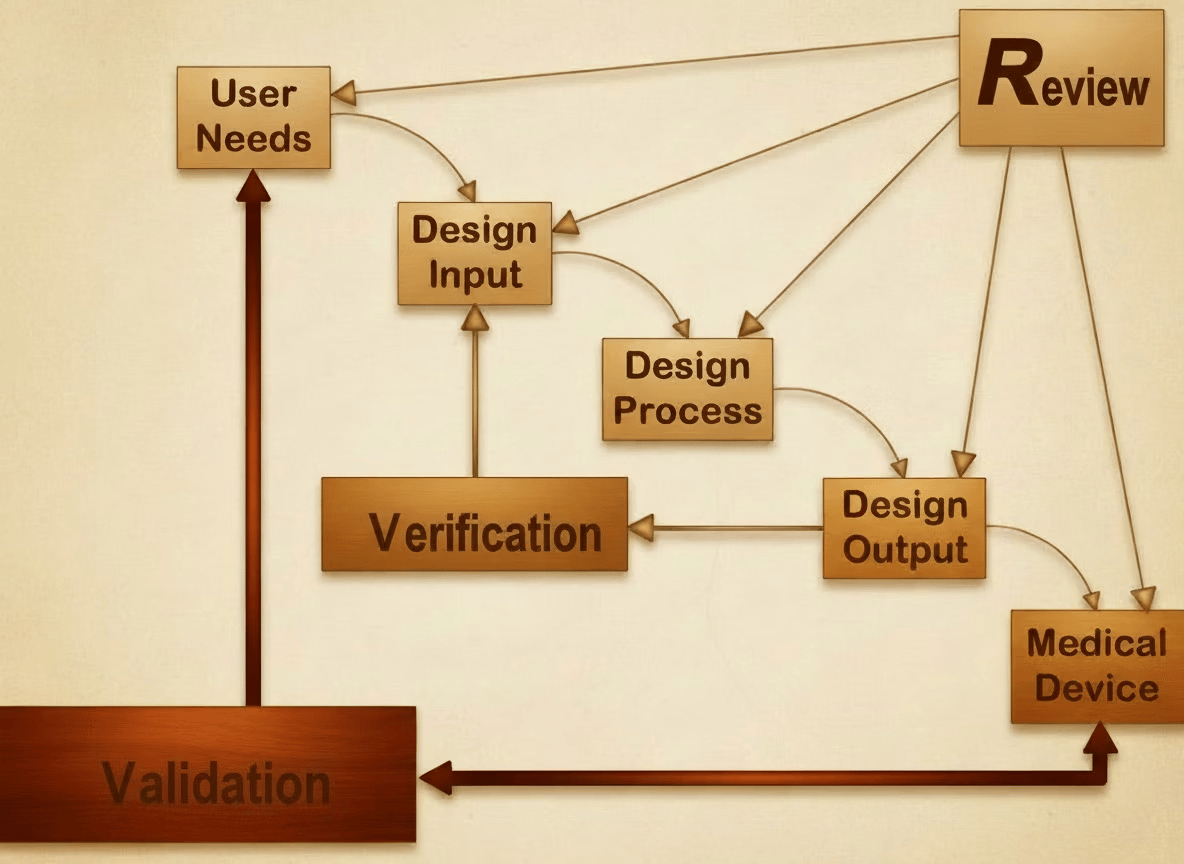
V&V Planning
Applicable Regulatory Requirements
- ISO 13485:2016, Clause 7.3.6 - Design and development verification (plans shall include statistical techniques with rationale for sample size)
- ISO 13485:2016, Clause 7.3.7 - Design and development validation (plans shall include statistical techniques with rationale for sample size)
A critical principle: V&V should NOT be an experiment. By the time you reach formal V&V, you should already know the outcome and capability of your system based on feasibility studies, design characterization, and dry-run testing. Formal V&V confirms what you already know with statistical rigor—it shouldn’t be discovering basic performance characteristics.
V&V Critical Principles
- Not an Experiment
- Know Outcomes Beforehand
- Do Feasibility Studies
- Perform Dry-Run Tests
Sampling Strategies
Type Testing (N=1)
Use when there is NO variation in test performance, confirming presence/absence of features, or fixed design characteristics. A single sample sufficiently demonstrates compliance because the result will be identical across all units.Attribute Data Analysis
For pass/fail data with variation, use methods like Bayes Success Run, binomial confidence intervals, or acceptance sampling plans. These techniques handle go/no-go results where variation affects pass rates.Variable Data Analysis
For continuous measurements, use Normal Tolerance Intervals or capability studies with normal distribution. Options include testing many units mid-range, stress testing to induce failures, or testing fewer units at worst-case conditions. PHASE [ALL/ANY]Design Changes
Applicable Regulatory Requirements
- ISO 13485:2016, Clause 7.3.9, 21 CFR 820.30(i) - Design and development changes
When Design Changes Occur
Design Change Control Process
1
Identification & Documentation
Document the proposed change, rationale, and affected design elements. Assign unique change control number for traceability.
2
Impact Assessment
Evaluate impact on design inputs, outputs, risk analysis, verification/validation, and regulatory submissions. Determine if change is significant.
3
Verification or Validation
Conduct appropriate testing or re-testing to confirm the change achieves intended results without introducing new risks or failures.
4
Review & Approval
Cross-functional review by design, quality, regulatory, and other stakeholders. Formal approval before implementation.
5
Implementation & Communication
Update all affected documentation. Train personnel and communicate changes to relevant parties.
Design Transfer
Applicable Regulatory Requirements
- ISO 13485:2016, Clause 7.3.8, 21 CFR 820.30(h) - Design and development transfer
Production Readiness
Ensure manufacturing/production processes can consistently produce devices that meet all design specifications and quality requirements (eg. pilot production runs, process validation etc.)Documentation & Training
Verify that all production specifications, work instructions, and quality control procedures are complete, accurate, and traceable to design outputs. Complete training of all production personnel.Cross-Functional Alignment
Establish clear communication and shared understanding between design, manufacturing, quality, and regulatory teams. Conduct design transfer readiness assessments. DOCUMENTATIONDesign & Development File
Applicable Regulatory Requirements
- ISO 13485:2016, Clause 7.3.10, 21 CFR 820.30(j) - Design and development files